How Public Health Research Shapes Healthier Communities.
18 June, 2025· Article by Maria Jones


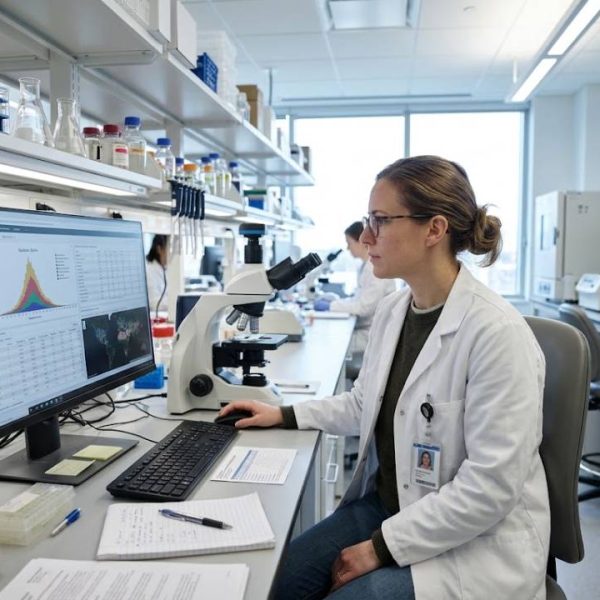
Every time a city adds a smoke-free zone, a school offers a vaccination day or a clinic opens in a neglected district, research sits somewhere behind the decision. Public health is the science of protecting and improving the health of whole groups, not just single patients. This article explains how that research works, why it matters and how you can read health news with a clearer eye.
What public health research actually studies
Public health researchers ask questions about populations. How many people are affected by a condition? Which groups face the highest risk? What measures reduce that risk at the lowest cost?
To answer, they combine tools from several fields: epidemiology, statistics, social science and environmental science. The aim is to find patterns that no single doctor could see in a waiting room.
Public health works by spotting problems early and acting before they grow.
The role of data and surveillance
Good decisions depend on good numbers. Health agencies collect data on births, illnesses, hospital visits and causes of death. Surveys add information about habits such as sleep, diet and physical activity.
Organizations like the World Health Organization gather and compare this data across countries, which helps spot outbreaks and track long-term trends.
Privacy is a serious part of this work. Data is usually anonymized, and strict rules limit who can see it.
Prevention beats cure
Many of the biggest health gains in history came from prevention rather than treatment: clean water, sanitation, vaccination, safer workplaces and tobacco control.
Research tells planners which steps pay off. For example, studies of school meals have shown links between regular healthy food and better concentration. Studies of road design have shown how lower speed limits cut serious injuries.
These findings turn into rules, campaigns and funding, which is why robust evidence matters so much.
Mental health belongs in the picture
For a long time, public health focused on infections and physical illness. Today, mental well-being has a firm place on the agenda. Researchers study loneliness, stress at work, screen habits and access to counseling.
Community programs such as peer support groups, school wellbeing lessons and workplace check-ins are tested against simple outcomes like sleep quality, absence from work and self-reported mood.
From laboratory to everyday life
Pure health science, the lab work on cells, genes and molecules, feeds into public health too. A new vaccine, a better diagnostic test or a clearer understanding of how a virus spreads all begin in basic research.
The step from laboratory to community is slow. Trials must show that a method is safe and works in real conditions, and officials must decide how to deliver it fairly.
Sharing evidence across languages
Health knowledge only helps when people can read it. Clinical guidance, trial results and patient leaflets are written in many languages, and an unclear phrase can change how a message is understood. Teams that work across borders often rely on medical translation services so that instructions, consent forms and study reports mean the same thing everywhere.
The same care applies to patient paperwork. This overview of why medical document translation matters shows how small wording errors can lead to real confusion.
How to read a health headline
News about new studies appears daily, and headlines often promise more than the research shows. A few habits help:
Check how many people took part. Look at whether the study compared groups or only observed one. Notice who paid for it. See whether other teams have found similar results. Be careful with words like "linked to," which do not prove cause and effect.
A single study is a clue, not a verdict. Strong conclusions usually come from many studies pointing the same way.
What communities can do
You do not need to be a scientist to take part. Joining a survey, attending a local screening day or sharing reliable information with family all support community health.
Local governments can publish clear data, involve residents in planning and fund programs that reach people who are often missed, such as older adults living alone, migrants and people in rural areas.
Why local context matters
A program that works in a large city may fail in a small village. Climate, culture, income and trust in institutions all shape results. Researchers therefore test ideas in different settings and talk with residents before scaling up. Listening to the people who live with a health problem often reveals barriers that numbers alone would miss, such as travel costs, opening hours or fear of stigma.
Looking ahead
Better data tools, wearable devices and large collaborations are changing how researchers learn about health. At the same time, questions of fairness remain: who gets access to new treatments, and who has a voice in setting priorities?
Public health progress depends as much on trust and clear communication as on technology.
This article is general education about health science and is not medical advice. For personal health concerns, please speak with a qualified health professional.
Recent Posts

The Placebo Effect: Why a Suga...

Comment la santé publique tra...

Wie aktuelle Gesundheitsforsch...
De la recherche en laboratoire...

The Science Behind Healthcare ...

How Editing and Proofreading S...
Share it.

Links
We use cookies
We use cookies to give you the best online experience, remember your preferences, and understand how the site is used. You can accept all cookies, reject optional ones, or choose which categories to allow.
Privacy PolicyCookie preferences
Choose which cookies we can use. Necessary cookies stay on because the site cannot work without them.
For more details, read our Privacy Policy.