The Placebo Effect: Why a Sugar Pill Can Still Make People Feel Better.
20 July, 2026


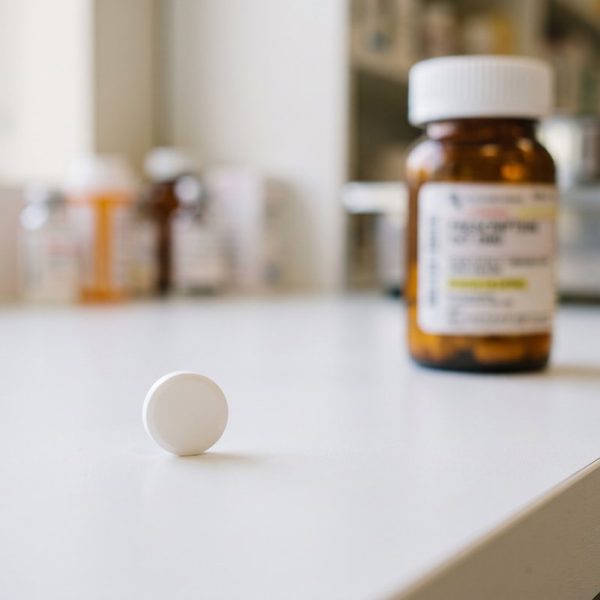
The placebo effect is one of the strangest and most useful findings in all of medicine. Give someone a pill that contains no active drug, tell them it might help, and a real share of people genuinely feel better. Their pain eases, their mood lifts, their symptoms settle. Nothing pharmacological has happened, yet the improvement is measurable. For more than a century this quiet phenomenon has shaped how researchers test new treatments, and it still surprises the scientists who study it.
What the placebo effect actually is
A placebo is an inactive treatment, often a sugar pill or a saline injection, made to look exactly like the real thing. The placebo effect is the improvement people report after taking it. The response is not imaginary and it is not lying. Brain imaging shows that expecting relief can trigger the release of the body's own painkillers, the endorphins, and can change activity in regions tied to pain and emotion. In other words, belief becomes biology. The expectation of getting better sets off a chain of genuine physical events.
This is exactly why a fair test of any new drug has to account for it. If a medicine only beats no treatment at all, some of that benefit might simply be the placebo response dressed up as a cure.
A discovery shaped under pressure
Modern interest in placebos grew partly out of medicine practised in hard conditions. Field doctors in the twentieth century noticed that reassurance, and even inert injections, could calm patients when real supplies ran short. Later researchers set out to measure the effect properly. By the middle of the century the placebo controlled trial had become the standard for deciding whether a treatment truly worked. What began as a curiosity turned into one of the most important tools science has for telling real progress apart from wishful thinking.
Why researchers build trials around placebo pills
The question of what are placebo pills used for sits at the heart of the randomized controlled trial. Volunteers are split into two groups. One receives the drug being tested, the other receives an identical looking dummy. Neither the patients nor, in a double blind study, the doctors know who got which until the trial ends. Then the two groups are compared, and the real medicine has to outperform the placebo by a clear margin before anyone can call it effective.
Without that comparison, honest conclusions are nearly impossible. People improve for all sorts of reasons that have nothing to do with a pill. Many conditions ease on their own, and simply being cared for makes people feel better. The placebo group captures all of that background noise so the true signal of the drug can stand out.
When the effect is strongest
The placebo effect shows up most clearly with symptoms shaped by the brain. A well known placebo effect example is pain relief, where dummy treatments can produce real, if temporary, drops in reported discomfort. It also appears with anxiety, depression, nausea, fatigue and the symptoms of irritable bowel syndrome. The way a placebo is delivered matters too. A larger pill can seem more powerful than a small one, an injection can beat a tablet, and a warm, confident clinician can strengthen the response. There is even a mirror image, the nocebo effect, where people who expect harm develop real side effects from an inactive treatment. Expectation, it turns out, cuts both ways.
The placebo effect demonstrates how much of experience is constructed by expectation rather than by the thing itself. That mechanism explains a great deal about how online gambling sites feel to use, since sound design and interface pacing manufacture a sense of control that the underlying maths does not support. Feeling informed and being informed are different states.
What the placebo effect cannot do
It is easy to oversell all this. A placebo can change how someone feels, but it does not shrink tumours, clear infections or mend broken bones. It moves the subjective experience of illness far more than the underlying disease. That is why the phrase "it is just the placebo effect" is misleading. The effect is real, but it has firm limits, and no serious researcher treats it as a substitute for medicine that acts on the body itself.
Placebo research is one of the more philosophically awkward areas of medicine, since it complicates what counts as an effective treatment. Trial design has to account for it. It remains a live methodological problem across the life sciences rather than a curiosity.
Why careful reporting matters more than ever
Because the placebo response is so powerful, the value of a study rests on how carefully it is designed, described and shared. Small errors in how results are written up or translated can distort what a treatment really does. As research crosses borders, that precision becomes essential, which is why teams increasingly rely on specialists who understand that medical documents need a certified translator, not AI, to keep meaning intact from one language to the next.
The same rigour feeds the wider shift toward precision medicine, where treatment is tailored to the individual rather than the average patient. Knowing exactly how much of a response comes from the drug and how much from expectation is part of that puzzle. For anyone who wants to dig deeper, the history and mechanics are covered well in the overview of the placebo on Wikipedia, while the research summaries from the National Center for Complementary and Integrative Health lay out what the science currently supports.
The placebo effect is a reminder that healing is never purely mechanical. The mind and the body are in constant conversation, and sometimes the belief that we are being helped is enough to start the process. That does not replace real treatment, but it does show why the human side of care will always matter.
Recent Posts

Comment la santé publique tra...

Wie aktuelle Gesundheitsforsch...

The Science Behind Healthcare ...

How Editing and Proofreading S...

How AI Tools Uncover Health Ri...

Advancing Health Science with ...
Share it.
Links
We use cookies
We use cookies to give you the best online experience, remember your preferences, and understand how the site is used. You can accept all cookies, reject optional ones, or choose which categories to allow.
Privacy PolicyCookie preferences
Choose which cookies we can use. Necessary cookies stay on because the site cannot work without them.
For more details, read our Privacy Policy.